No.07 · Regions
Kyushu travel guide: pick a trip, a season and a pass
Fukuoka is the easy way in. Choose a trip, a season and a base, then check pass prices, volcano alerts and Kumamoto Castle's status before you go.
Kyushu is Japan’s southern island of hot springs, harbour cities and active volcanoes, and Fukuoka is the easy way in: about 1 h 50 to 2 h by air from Haneda, or 4 h 52 to 57 on the Nozomi. Plan 4 to 7 days: four for Fukuoka plus Beppu, five for Nagasaki or the Kagoshima volcano loop, seven for a pass circuit. Winter is onsen season, and the official Kyushu tourism site pitches it as food and hot springs, naming Beppu and Yufuin. Two things change what is open: volcano alert levels at Aso and Sakurajima, and Kumamoto’s recovery from the M7.1 earthquake of 28 Jul 2026. Read the official pages the week you go.
Dollar figures use about ¥155 to US$1 and are rounded; you pay in yen, so check the rate. Sums are converted from the yen total.
Best for: onsen weekends from Fukuoka, ramen and food stalls, Nagasaki history, volcano viewpoints, a castle city still repairing.
Which trip fits you?
Fukuoka plus Beppu is the simplest trip; Nagasaki, Kagoshima and Kumamoto each add a rail or air leg.
| Trip | Days | Start from | Season | Best for |
|---|---|---|---|---|
| Onsen weekend | 4 | Fukuoka, Beppu | Winter | Hot springs, food stalls |
| Food and history | 5 | Fukuoka, Nagasaki | February | Lanterns, harbour, peace sites |
| Volcano loop | 5 | Kagoshima | Any, alert permitting | Sakurajima, sand bath |
| Castle city | 2 to 3 | Kumamoto | After checking status | Castle, Aso if open |
| Yakushima hike | 2 extra | Yakushima | Winter conditions not found | Jomon Sugi |
| Pass circuit | 7 | Fukuoka, Kagoshima | Any | Long Shinkansen legs |
When should you go?
Go in winter for baths and food, in spring for blossom and in November for foliage and sumo. Fukuoka averages 6.9 °C in January and 7.8 °C in February, and its wettest months are June and July.
| Season | What is on | Catch |
|---|---|---|
| Winter | Beppu and Yufuin soaking. Nagasaki Lantern Festival, 5 to 21 Feb 2027, about 15,000 lanterns (unconfirmed). Dazaifu plum blossom, late Feb to late Mar last known, credited to the shrine, mid Feb to mid Mar in other guides | Nozomi all-reserved period includes 25 Dec to 5 Jan; Kumamoto Castle shut 29 Dec |
| Spring | Fukuoka cherry blossom: 2026 forecasts gave first bloom 17 to 23 Mar, full bloom about 28 to 30 Mar. Beppu Hatto Onsen Matsuri ran 1 to 5 Apr in 2026 | 2027 dates not found; Golden Week Nozomi all reserved 25 Apr to 6 May in 2026 |
| Summer | Hakata Gion Yamakasa ran 1 to 15 Jul in 2026, main race at 04:59 on 15 Jul from Kushida Shrine | 2027 dates not published; Gunkanjima landings can be cancelled in rough seas |
| Autumn | 2026 foliage forecast: early Nov to mid Dec, later than usual. Kyushu sumo tournament in Fukuoka in November (8 to 22 Nov in 2026) | Typhoons have stopped flights, ferries and trains |
Typhoons can halt Kyushu travel: Talim in September 2017 cancelled more than 640 domestic flights and stopped all main JR Kyushu services. The Japan Meteorological Agency gives typhoon formation as highest from July to October, peaking in August and September. Check the agency, JR Kyushu and your airline.
What does winter 2026-27 look like?
Winter 2026-27 centres on baths, food stalls and the lantern festival, with dated closures to plan around.
- Soak: the Beppu hells open year-round, 08:00 to 17:00. Hyotan (Beppu) is closed on 12 Nov and from 30 Nov to 4 Dec 2026 for works.
- Eat: yatai (street stalls) have no fixed holidays, but some stay shut in rain and storms.
- Time it: the lantern festival runs 17 days from Fri 5 Feb 2027, with the lighting usually at 18:00 on the first evening. The dates come from secondary guides and the official Nagasaki page is not read, so confirm them.
- Expect closures: Section C of the Nagasaki Atomic Bomb Museum is closed from 24 Nov 2026 to about March 2027 (Hiroshima and Nagasaki museums). Year-end closures are in Japan New Year closures.
- Expect a tax: Oita Prefecture plans a tiered lodging tax from as early as Jan 2027 (table below).
How do you get there and around?
Fly or take the Nozomi to Fukuoka, then use the Shinkansen and limited expresses for the rest.
From Tokyo
A flight is often cheaper than the train, and the Nozomi is the one to reserve early in the year-end rush.
| Option | Time | Fare seen |
|---|---|---|
| Haneda to Fukuoka | about 1 h 50 to 2 h | $120 to $150 (¥18,400 to ¥22,900) return, ANA |
| Haneda to Nagasaki | about 1 h 57 to 59 | $115 (¥18,100) return, ANA, late Nov |
| Haneda to Kagoshima | not found | $115 (¥17,800) return, ANA, early Nov |
| Nozomi to Hakata | 4 h 52 to 57 | $150 to $155 (¥23,400 to ¥23,800) one way, reserved |
These are advance fares for late Oct to Nov 2026 travel with baggage extra, and they move daily. Narita low-cost fares and times are not found. Rail and bus links from the airport are in Airport to city in Japan.
Around Kyushu
Hakata is the hub: Nagasaki is about 90 minutes, Beppu about 2 h 05 and Kagoshima-Chuo 1 h 16 to 1 h 46 away. Fares are reserved-seat prices from route guides, so read them as about.
| Leg | Time | Fare |
|---|---|---|
| Airport to Hakata | 5 min by subway | about $2 (¥260), older guide |
| Hakata to Kagoshima-Chuo | 1 h 16 to 1 h 46 | about $77 (¥11,950) |
| Hakata to Nagasaki | about 90 min | about $42 (¥6,490) |
| Hakata to Beppu | about 2 h 05 | $36 to $37 (¥5,570 to ¥5,680), two undated guides |
| Hakata to Yufuin | about 2 h 15 | $29 (¥4,550), last known and undated |
| Kagoshima-Chuo to Ibusuki | 50 to 80 min | $8 to $19 (¥1,170 to ¥3,000) |
- Kagoshima: Mizuho takes 1 h 16 to 20, Sakura 1 h 25 to 38, Tsubame 1 h 46 or more.
- Nagasaki: change at Takeo-Onsen from the Relay Kamome to the Shinkansen Kamome (23 to 30 min), across the same platform. Unreserved fares are listed from $29 to $38 (¥4,520 to ¥5,960); sources disagree.
- Beppu and Yufuin: the Sonic runs every 20 to 40 minutes by day. Shinkansen to Kokura plus the Sonic takes about 1 h 40 for about $42 (¥6,440). The Yufuin no Mori is all reserved.
- Ibusuki: the limited express runs three times a day; the cheaper local train takes 70 to 80 minutes.
- Not found: Hakata to Kumamoto time and fare, and transit from Kumamoto to Aso and Takachiho.
The Fukuoka Tourist City Pass costs $16 (¥2,500) for a day, or $18 (¥2,800) with Dazaifu, for overseas visitors with a passport. It is not valid on the Dazaifu Liner Bus “Tabito”.
Which pass pays?
A pass pays only on long legs: the 3-day All Kyushu pass beats a Hakata to Kagoshima return, and the Northern 5-day beats a Nagasaki plus Beppu loop. The JR Kyushu Rail Pass is for visa-exempt visitors only, with a temporary visitor stamp in the passport, and the operator page warns that the booking site may differ. Sun Q prices are unconfirmed and may differ on the booking site.
| Pass | 3 days | 4 or 5 days | 7 days |
|---|---|---|---|
| JR All Kyushu | $140 (¥22,000) | $155 (¥24,000), 5 days | $170 (¥26,000) |
| JR Northern | $97 (¥15,000) | $110 (¥17,000), 5 days | none |
| JR Southern | $77 (¥12,000) | none | none |
| Sun Q All | $77 (¥12,000) | $97 (¥15,000), 4 days | none |
| Sun Q Northern | $65 (¥10,000) | none | none |
Sun Q is a bus pass; these are digital prices and paper costs $13 (¥2,000) more. Digital days are flexible (2 in 3, 3 in 5, 4 in 7), a day runs 03:00 to 03:00, and it covers the Sakurajima ferry but not the Fukuoka to Nagato Yumoto express since 1 Jul 2025.
- Kagoshima return: two reserved legs cost $155 (¥23,900), against $140 (¥22,000) for the 3-day All Kyushu pass.
- Nagasaki plus Beppu loop: single fares total about $155 (¥24,340) at the higher Sonic fare, against $110 (¥17,000) for Northern 5-day, a saving of about $47 (¥7,340). Check the pass area map first.
- Nagasaki alone loses: a return costs $84 (¥12,980), less than the $97 (¥15,000) Northern 3-day.
- One bus return wins: a guide puts the Fukuoka to Kagoshima highway bus at $52 (¥8,000) return, so Sun Q pays only on several long hops. No bus time found.
A national pass is a different product; see What changed in Japan in 2026, and check whether it covers the Nozomi or Mizuho before you count it. By car, the Sakurajima ferry charges $11 (¥1,700) for a 3 to 4 m car; rental prices are not found. The licence rule is in Can I rent a car in winter with an IDP?
Where should you stay?
Fukuoka suits most trips because it is the rail and air hub for most of the other places.
| Stay in | Suits | Day trips and times | Catch |
|---|---|---|---|
| Fukuoka | First visit, food, short stays | Beppu 2 h 05, Yufuin 2 h 15, Nagasaki about 90 min, Kagoshima-Chuo 1 h 16 to 1 h 46 | Dazaifu time and fare not found |
| Nagasaki | History, lanterns, Gunkanjima | Hashima tour, 2.5 to 3 h | Atomic Bomb Museum Section C closed to about Mar 2027 |
| Kumamoto and Aso | Castle, volcano country | Aso and Takachiho by road or rail | Quake recovery, Aso alert level |
| Beppu or Yufuin | Soaking, slow days | Beppu hells half a day; Yufuin by Yufuin no Mori | Oita tax plan; no tattoo policy found |
| Kagoshima | Volcano, sand bath, Yakushima | Sakurajima ferry 15 min, Ibusuki 50 to 80 min, Kirishima by bus | Sakurajima 2 km no-entry rule |
The best split is Fukuoka for 3 to 4 nights plus Beppu, Yufuin or Nagasaki for 1 to 2, with Kagoshima as a second loop. It follows the travel times above.
What are the highlights?
Yatai, Nagasaki’s peace sites and Kumamoto Castle anchor the cities; Aso, Sakurajima, Kirishima, Takachiho and Yakushima anchor the wild side.
City and history
Fukuoka’s yatai and Nagasaki’s Peace Park cost little; Kumamoto Castle and Gunkanjima cost more.
| Sight | Fee | Hours | Catch |
|---|---|---|---|
| Fukuoka yatai | No cover at most stalls | Open 18:00, most 18:30 to 19:00; close about midnight | No fixed holidays; some shut in rain; mostly cash |
| Dazaifu Tenmangu | Grounds and museum fees not found | Opens 06:00 from the spring equinox, 06:30 from the autumn equinox; closes 19:00 Apr, May and Sep to Nov, 19:30 Jun to Aug, 18:30 Dec to Mar | Plum season Feb to Mar; closed days not found |
| Nagasaki Peace Park | Free | Open grounds | None found |
| Atomic Bomb Museum | $1 (¥200) | 08:30 to 17:30, per one 2026 report | Section C closed 24 Nov 2026 to about Mar 2027; shut 29 to 31 Dec |
| Glover Garden | $4 to $8 (¥620 to ¥1,300) | 08:00 or 09:00 to 18:00, sources differ | Fee may have changed 1 Apr 2026 |
| Gunkanjima tour | $27 to $29 (¥4,200 to ¥4,500) plus $4 (¥650) landing fee | Sails 10:30 and 13:40, 2.5 to 3 h | Landing can be cancelled in rough seas |
| Kumamoto Castle | $5 (¥800) | 09:00 to 17:00; last entry 16:00 park, 16:30 keep | Closed 29 Dec |
Gunkanjima (Hashima) tours need a reservation, and a cancelled landing brings a partial or full refund.
Kumamoto Castle reopened on 13 Aug 2026 after the earthquake. Its information page lists the South Gate on weekdays and both gates at weekends and holidays. Damage counts conflict between reports, so none is given; check the official page for open areas. Dazaifu and the other western shrines are covered in Western Japan temples and shrines, and the wider history in Japanese history for travellers.
Volcanoes and wild
Volcano access depends on the alert level, and Takachiho Gorge needs an online boat booking.
| Sight | Fee | Access | Catch |
|---|---|---|---|
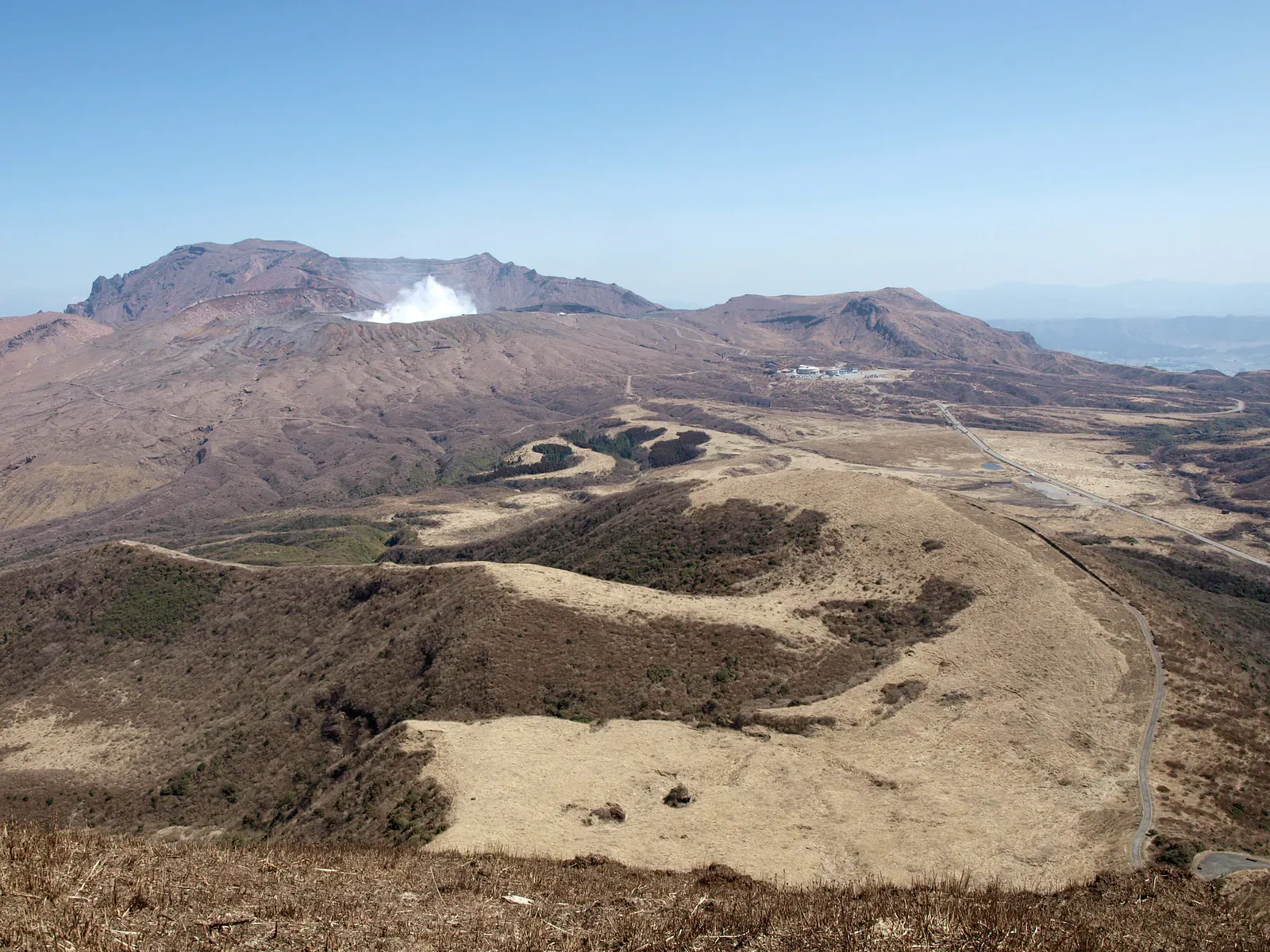
| Mt Aso | Not applicable | Depends on the alert level | At Level 2, no entry within about 1 km of Nakadake; at Level 3 the zone was about 2 km in Aug 2026 |
| Sakurajima | Ferry $1 to $2 (¥200 to ¥250) one way | 15 min, 24 h, 118 weekday sailings | No entry within 2 km of the craters at any level |
| Kirishima | Trail fees not found | Takachiho-no-mine open and loop bus about 3 trips a day, per a May 2026 guide | Shinmoedake routes closed, per the same guide |
| Takachiho Gorge | Boat $26 to $33 (¥4,000 to ¥5,100) for up to 3, 30 min | Hours not found | Online booking only; suspended in high water |
The Aso Hohi Line, ropeway and museum status for 2026 is not found. On Sakurajima the Island View bus runs every 30 minutes to the Yunohira viewpoint, and one guide lists the free Visitor Centre as open 09:00 to 17:00. One guide says ash fall is frequent; official ash advice is not found. Rules and levels are explained in Visiting active volcanoes in Japan and Volcano alert levels in Japan.
Is Yakushima doable?
Yes, as a long day. The Jomon Sugi hike is about 20 km round trip, per the Ministry of the Environment, and about 10 hours from a pre-dawn start, per a secondary guide. From March to November private cars are banned on the road to the Arakawa trailhead, and a shuttle leaves the Yakusugi Museum (about 40 minutes) at 05:00 to 06:00 and returns 15:00 to 18:00. Buy the ticket at least a day ahead, and bring rain gear.
The shuttle is $13 (¥2,000) round trip in one guide and $19 (¥3,000) from Jun 2026 in operator listings. The mountain fee is a voluntary donation, last known at $6 (¥1,000) for a day trip and $13 (¥2,000) for longer, per the town’s page; other guides give $3 to $5 (¥500 to ¥800), and the 2026-27 amount is unclear right now. Snow is possible at altitude in winter, and conditions plus ferry and flight times to the island are not found. The huts rule in Can I hike without booking huts? covers Kumano Kodo and the Alps, not Yakushima; trail detail is in Hiking trails by region.
What should you eat?
Order Hakata ramen, yatai dishes and motsunabe in Fukuoka, champon in Nagasaki and kurobuta pork in Kagoshima. Yakiniku prices and restaurant booking lead times are not found; dishes by region are in the Japan food guide.
| Dish | Price seen | Note |
|---|---|---|
| Hakata ramen | $5 to $6 (¥760 to ¥980) a bowl | Shin Shin $5 (¥760 to ¥820), Ippudo $6 (¥920), Ichiran $6 (¥980); extra noodles $1 to $2 (¥150 to ¥300) |
| Yatai evening | $13 to $26 (¥2,000 to ¥4,000) a person | One or two stalls; dishes $3 to $10 (¥500 to ¥1,500) |
| Motsunabe | $32 (¥4,980) | One premium full course; a typical set price is not found |
| Champon | $6 to $10 (¥1,000 to ¥1,600) | Nagasaki noodle soup |
| Kurobuta | Lunch from $6 (¥1,000); course $32 (¥5,000) | Kagoshima pork; a Fukuoka lunch is $8 (¥1,200) |
Go Fukuoka’s yatai page sets the manners: one drink and one dish each, groups of 2 or 3 and luggage at a locker or hotel. About 10 percent of stalls take cards.
Before you go Yatai have no toilets, run mostly on cash and open between 18:00 and 19:00. Carry coins and plan a toilet stop first.
Where can you soak?
Soak in Beppu or Yufuin in winter, and in the sand at Ibusuki. Fees mix official and secondary pages, so confirm them.
| Bath | Fee | Hours |
|---|---|---|
| Beppu hells | $14 to $15 (¥2,200 to ¥2,400) combo; $3 (¥450) each | 08:00 to 17:00, last entry 16:30 |
| Takegawara | $2 (¥300) bath; sand bath $10 (¥1,500), per Beppu City | Bath 6:30 to 22:30; sand 8:00 to 22:30, last entry 21:30; closed 3rd Wednesday |
| Hyotan | Family bath $15 (¥2,400) for 60 min, up to 3 adults; main bath $7 (¥1,160) | Opens 9:00; closed 12 Nov and 30 Nov to 4 Dec 2026 |
| Kurokawa pass | $8 to $10 (¥1,300 to ¥1,500) for 3 baths | Inn by inn |
| Yunotsubo | $1 (¥200), Yufuin; undated page | 10:00 to 22:00, no regular closing day |
| Ibusuki Saraku | Sand bath $7 to $9 (¥1,080 to ¥1,400) | 08:30 to 21:00, last entry 20:30 |
Sources disagree on the hells combo price and count it as seven or eight hells. The Kurokawa pass covers 24 inns, lasts 6 months and works for day visitors, though some inns exclude private baths. At Ibusuki one source notes a maintenance closure in part of December; another lists none. Beppu and Yufuin onsen covers both towns in depth.
Tattoos: no official policy is found for the Beppu hells, Takegawara, Hyotan, Yufuin or Kurokawa, so none is listed as allowing them. A bath directory counts 140 Oita baths that allow tattoos, some with conditions, the most of any prefecture; that is a directory count, not a policy for a named bath. For Kurokawa, one travel site reports six inns that allow tattoos and three that refuse them even covered; no official page confirms it. A private bath is the fallback.
Rules are in Onsen etiquette, Tattoos and onsen and Private onsen; inn cutoffs are in Staying in a ryokan.
Sample itineraries
Each plan is costed from timetables and fares. Sums cover transport and fees only, not lodging, food or tax.
1. Onsen weekend: Fukuoka and Beppu, 4 days
- Day 1: land, subway to Hakata (5 min), yatai after 18:30.
- Day 2: Dazaifu half day on the City Pass with Dazaifu, $18 (¥2,800).
- Day 3: Hakata to Beppu on the Sonic (about 2 h 05, $36 to $37 (¥5,570 to ¥5,680)), the hells combo at $14 to $15 (¥2,200 to ¥2,400), then Takegawara.
- Day 4: back to Hakata on the Sonic, or swap Beppu for Yufuin on the Yufuin no Mori (about 2 h 15 each way).
Sum: two Sonic legs at the higher fare, $73 (¥11,360), with the hells combo and the pass come to about $105 (¥16,400 to ¥16,600). Takegawara adds $2 (¥300), or $12 (¥1,800) with the sand bath.
2. Food and history: Fukuoka and Nagasaki, 5 days (February)
- Days 1 to 2: Fukuoka, yatai, ramen.
- Day 3: Hakata to Nagasaki (about 90 min, $42 (¥6,490)). Peace Park is free, the Atomic Bomb Museum is $1 (¥200) with Section C closed, and lanterns light at night during 5 to 21 Feb 2027.
- Day 4: the 10:30 Gunkanjima tour (about 3 h, weather permitting), then Glover Garden.
- Day 5: back to Hakata.
Sum: two Nagasaki legs $84 (¥12,980), Gunkanjima $27 (¥4,200) plus $4 (¥650) landing, museum $1 (¥200) and Glover $4 to $8 (¥620 to ¥1,300) come to about $120 to $125 (¥18,650 to ¥19,330). Kumamoto Castle is out of the sum because its transit is not found.
3. Volcano loop: Kagoshima, 5 days
- Day 1: fly Haneda to Kagoshima (time not found; ANA return from about $115 (¥17,800) for early Nov travel).
- Day 2: Sakurajima ferry, 15 minutes, about $2 (¥250) each way, then the Island View bus to Yunohira. Stay at the viewpoints.
- Day 3: Ibusuki by local train (70 to 80 min, $8 (¥1,170) each way) and the Saraku sand bath.
- Day 4: Kirishima, where Takachiho-no-mine is open and Shinmoedake routes are closed, per a May 2026 guide. The loop bus runs about 3 trips a day; fares not found.
- Day 5: fly home.
Sum: flight, ferry return $3 (¥500), Ibusuki trains $15 (¥2,340) and the sand bath come to about $140 (¥21,700 to ¥22,000). Yakushima adds 2 days.
What are the rules, risks and costs?
Check volcano levels the day you go, read Kumamoto Castle’s page for open areas and add lodging tax to every night. A ramen bowl costs $5 to $6 (¥760 to ¥980) and a return to Nagasaki $84 (¥12,980).
Safety Level 2 means no approach to the crater area, and Level 3 means no entry to the mountain. Levels change without notice: a news report (unconfirmed) has Aso at Level 2 from 21 June 2026, Level 3 from 14 August and Level 2 again by early October. Treat any guide that states one fixed level as out of date, and open the Japan Meteorological Agency volcano activity page the day you go.
- Earthquake recovery: treat any Kumamoto “reopened” notice as a prompt to read the official page for open areas.
What lodging tax applies?
Fukuoka City charges $1 (¥200) or $3 (¥500) a night, and Oita Prefecture plans a tiered tax from as early as January 2027.
| Place | Rate | Status |
|---|---|---|
| Fukuoka City | $1 (¥200) a night under $130 (¥20,000); $3 (¥500) at $130 (¥20,000) or more | Hotel notices; official page not read |
| Oita Prefecture | $1 to $13 (¥100 to ¥2,000) a person a night, four brackets | Planned from as early as Jan 2027; passage unconfirmed |
| Beppu | Existing bathing tax; one hotel lists $2 to $3 (¥250 to ¥500) | Accommodation tax under study |
| Yufuin | $1 to $3 (¥150 to ¥500) onsen tax at many ryokan | Undated directory |
Kumamoto, Nagasaki and Kagoshima rates are not found. The Oita plan, reported in March 2026, exempts school trips and could reach Beppu and Yufuin in the launch window, so ask your hotel. Hotel rates are not found. Other cities are in Hotel taxes in Japan.
Can I…?
- Use an onsen with a tattoo? Depends on the bath; no official policy is found for Beppu, Yufuin or Kurokawa.
- Cover a tattoo with a sticker? Yes, if the bath allows it and the tattoo is small.
- Use a private bath? Yes, where the venue offers one; some are for overnight guests only.
- Use a JR Pass? Depends on your legs; add the fares leg by leg and check Nozomi coverage.
- Rent a car in winter with an IDP? Yes, with a paper 1949 Geneva permit.
- Work remotely on a tourist visa? No. The Digital Nomad status needs about $64,520 (¥10 million) a year.
Related guides
- Onsen guide for beginners for water, rules and winter closures.
- Wild and Trek Japan for volcano levels and hiking rules.
- Sumo tournaments for the November Fukuoka basho, and Matsuri festival calendar for festivals.
Where next?
- Destinations, the hub for cities, regions and islands.
- Okinawa, the next region south.
- Chugoku, the next region north, and Shikoku, across the sea to the east.
- Nagano in winter, a Shinkansen trip from Tokyo for snow and baths.
Quick answers
Is Kyushu worth visiting in winter?
Yes, for hot springs and food. The official Kyushu tourism site pitches winter as gastronomy and hot springs and names Beppu and Yufuin, and the Nagasaki Lantern Festival is listed for 5 to 21 Feb 2027. Snow dates for Aso and Kuju are not found, so check road and rail status before a mountain day.
How many days do you need in Kyushu?
Four days cover Fukuoka plus Beppu. Fukuoka plus Nagasaki and the Kagoshima volcano loop take five days each, and a pass circuit takes seven. These plans are built from timetables and fares, not from an official itinerary.
Is the JR Kyushu Pass worth it?
Sometimes. Hakata to Kagoshima-Chuo and back costs $155 (¥23,900) in reserved fares, against $140 (¥22,000) for the 3-day All Kyushu pass. A single Nagasaki return costs $84 (¥12,980), less than the $97 (¥15,000) Northern 3-day pass.
Is Kumamoto Castle open after the earthquake?
Yes. It reopened on 13 Aug 2026, after the M7.1 earthquake of 28 Jul. Entry is $5 (¥800), 09:00 to 17:00, closed 29 Dec, and the open gates differ between weekdays and weekends. Damage reports conflict, so check the castle's official information page before you go.
Can you visit Aso and Sakurajima right now?
Yes, within the alert limits. At Level 2 you may not approach the crater area, and at Level 3 you may not enter the mountain. Levels change without notice, so open the Japan Meteorological Agency volcano page the day you go.
Is it cheaper to fly or take the Shinkansen from Tokyo to Fukuoka?
Flying costs less. ANA listings for late Oct to Nov 2026 showed a Haneda to Fukuoka return from $120 to $150 (¥18,400 to ¥22,900), baggage extra on advance fares, against $150 to $155 (¥23,400 to ¥23,800) one way on the Nozomi. The flight takes about 1 h 50 to 2 h, the train 4 h 52 to 57.