

Guide · Wild and Trek
Hiking trails in Japan by region: what to book and when
Six trail groups, each with its length, season and booking rule: Kumano Kodo, Nakasendo, Daisetsuzan, Yakushima, Shiretoko Five Lakes and the Japan Alps.
Each of Japan’s main walks has its own booking rule. Kumano Kodo needs a bed booked months ahead, the Nakasendo is a short walk between two post towns, most Daisetsuzan huts are unstaffed and the Shiretoko Five Lakes ground path needs a guide in bear season. Nagano and Toyama add a filed climbing plan on designated trails. Dates are the 2026 season; 2027 dates are not published.
Which trails are the main ones?
Six trail groups make up the main walks. The table puts their length, season and rules side by side.
| Trail | Region | Length and time | Season | Booking or rules |
|---|---|---|---|---|
| Nakasendo | Nagano | About 8 km, 2.5 to 3 h, Magome to Tsumago | Baggage service in spring, summer and autumn | Baggage forwarding between the two towns |
| Kumano Kodo | Kii Peninsula | 7.5 to 25 km to Hongu Taisha, by start point | Open all year, spring and autumn peak | Lodging about 6 months ahead, online booking closes 20 days before check-in |
| Daisetsuzan | Hokkaido | Kurodake to Asahidake traverse 5 to 7 days | Late June to end of September (2021 brochure) | Two staffed huts, the rest unmanned |
| Yakushima | Kagoshima | Jomon Sugi, about 20 km round trip | Car access to the trailhead restricted March to November | Voluntary mountain fee, buses from the Yakusugi Museum |
| Shiretoko Five Lakes | Hokkaido | Boardwalk and ground path | Guide needed 10 May to 31 July | Registered guide on the ground path |
| Japan Alps | Nagano, Toyama, Gifu | Route dependent | July to early October | Climbing plan, huts by reservation |
Kumano Kodo: how long are the sections?
The Nakahechi walk from Chikatsuyu to Hongu Taisha is 25 km at full length, and later starts cut it to 21.5, 19, 17 or 7.5 km. The Tanabe City Kumano Tourism Bureau says the route is open all year, mild and with little snow.
Book lodging about six months ahead for spring and autumn. Takahara, Chikatsuyu, Nonaka and Koguchi fill first, and online booking closes 20 days before check-in. The Kohechi route, over 65 km with four passes, is closed from mid-December to mid-March. Stage tables, luggage and bears are on Kumano Kodo booking.
Nakasendo: what is the Magome to Tsumago walk?
The Magome to Tsumago section is about 8 km and takes 2.5 to 3 hours, per Nagano Prefecture’s tourism site. Other official pages give 7.5 km and about 9 km.
Magome sits at 600 m, the pass at 801 m and Tsumago at 420 m, so Magome to Tsumago is the easier direction. Reach it by the JR Chuo line to Nakatsugawa or Nagiso, then a local bus. Baggage forwarding between the towns runs daily in summer and on weekends and holidays in spring and autumn, per the two towns’ info centres. The price, cut-off times, bells and permits were not found on official pages.
Japan Alps: where are the big routes?
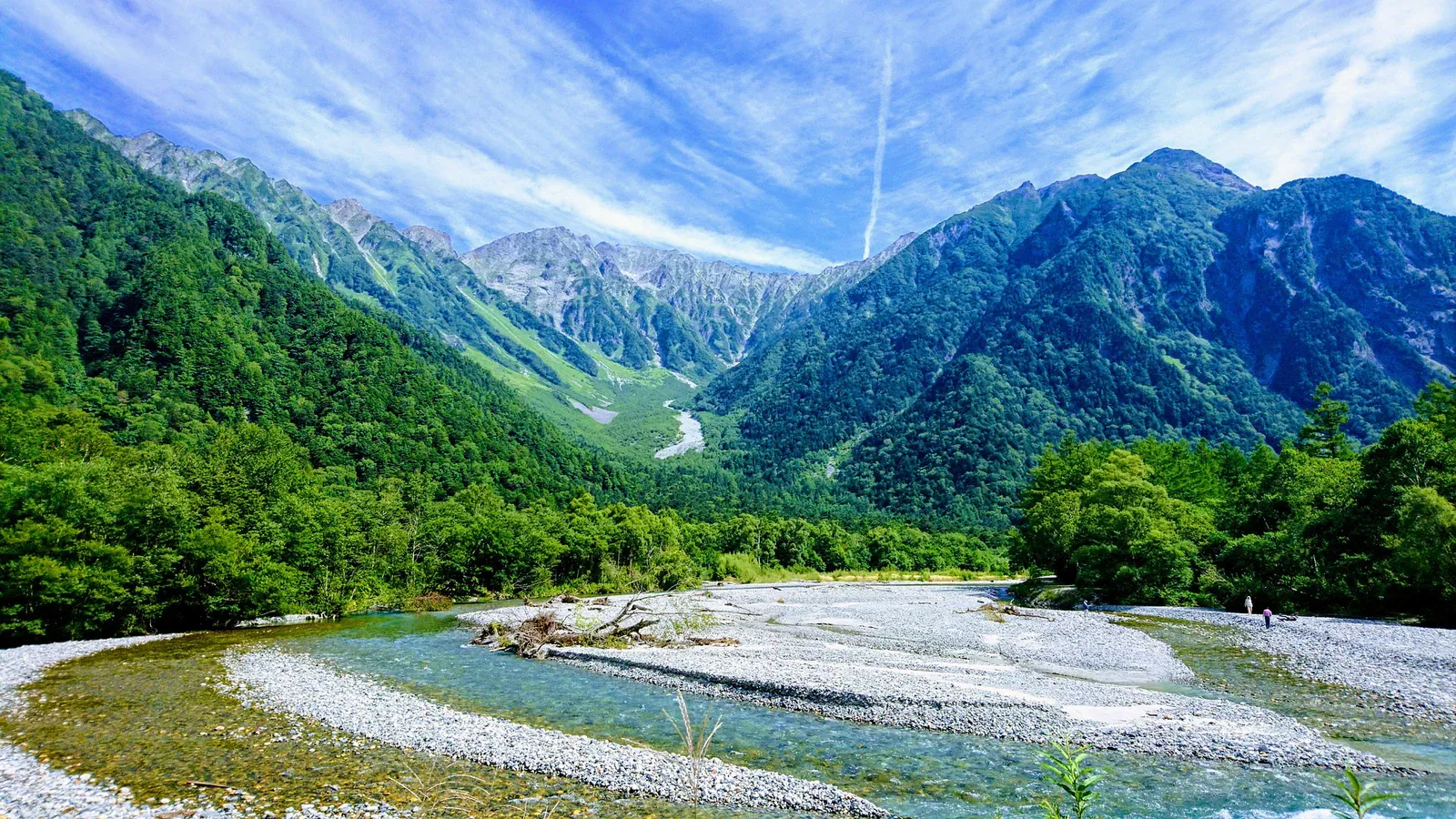
The big routes are in the Northern Alps across Nagano, Toyama and Gifu, and Nagano and Gifu require a filed climbing plan. A secondary travel guide puts the climbing season at July to early October. Yarigatake huts take reservations one month before arrival. Routes, hut prices, Tateyama and Kamikochi are on Climbing the Japan Alps beyond Fuji.
Daisetsuzan: which huts are staffed?
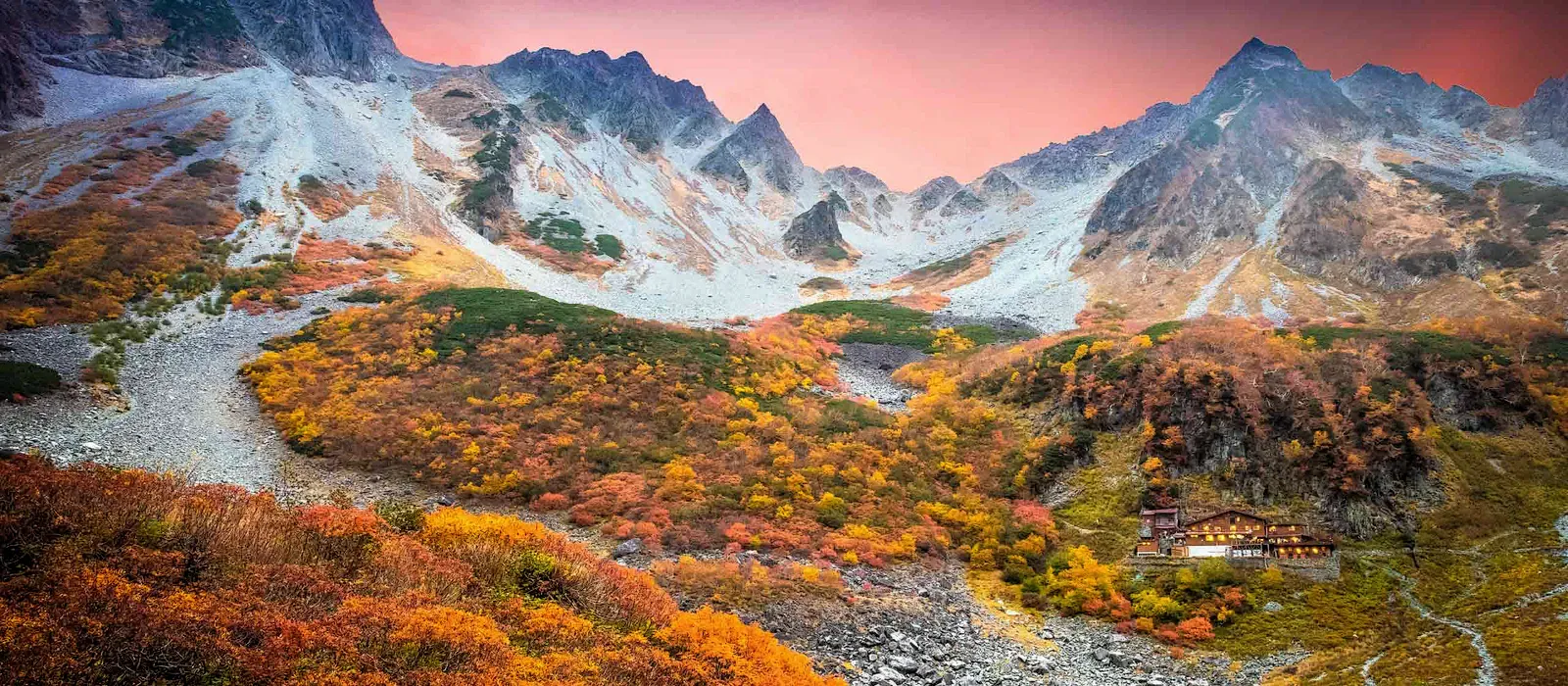
Only two Daisetsuzan huts have hutkeepers, and only in summer: Hakuundake Refuge Hut and Kurodake-ishimuro. All other huts are unmanned, and the park council’s hut page gives no opening or closing dates.
Beds are few. Hakuundake sleeps 50 and Chubetsudake 40, while Kamihorokamettoku, Bieifuji and Hisagonuma hold 30 each. Asahidake-ishimuro holds 20 and allows no overnight stay except in an emergency. Hakuundake takes no reservations, but you must contact it in advance so it can control crowding. Kurodake-ishimuro posts its details on its own social media account. No booking is listed for the other huts.
Camping is allowed only at designated sites. The Kurodake campsite costs $3 (¥500) per person, with 35 tents on a first-come basis. The Hakuundake campsite costs $3 (¥500) per person plus a $6 (¥1,000) trail donation. Kurodake-ishimuro asks a $3 (¥500) toilet donation. Hut bed prices are not listed.
Dollar figures use about ¥155 to US$1 and are rounded; you pay in yen, so check the rate.
Late July to early August is the busiest time, and hut space may be unavailable. The park council’s 2021 brochure, the last known edition, gives the season as late June to the end of September, with snow possible in midsummer. Some water sources dry up from early July, so boil or filter water. A secondary guide reports hydrogen sulfide gas pockets around Ohachidaira.
A 2026 Ministry of the Environment leaflet says conditions of use can change with bear sightings, so ask centre staff. The Hokkaido Regional Environment Office answers on 011-299-1950. Winter hut status was not found. ## Shiretoko Five Lakes: when do you need a guide?
The Five Lakes ground path needs a registered guide in peak bear season, 10 May to 31 July, per an Environment Ministry page that carries no date. Confirm the season each year. A safety lecture comes first.
The elevated boardwalk to Lake Ichiko, the first lake, is open without a guide. The Goko Field House bans feeding, litter, eating, smoking and drones, and you stay on paths. The Rausu Visitor Centre rents bear spray and boots for a fee. The guide fee and the park entry fee were not found.
Safety Book a registered guide for the Five Lakes ground path from 10 May to 31 July. Read Bear safety first. The Goko Field House number is 0152-24-3323.
Yakushima: how do you reach the Jomon Sugi?
From March to November, take a trekking bus from the Yakusugi Museum to the Arakawa entrance, because car access there is restricted in the on-season.
The Jomon Sugi hike is about 20 km round trip from the Arakawa trailhead, per the Ministry of the Environment’s Yakushima page. A secondary travel guide says it takes about 10 hours and starts before dawn. Long holidays such as Golden Week bring about 800 people a day. Stay on the marked trail, do not rest in vegetation and carry waste out.
The mountain fee is a voluntary donation run by the Yakushima Mountain Environmental Management Council. Last known: $6 (¥1,000) for a day trip and $13 (¥2,000) for longer, per the town’s page as seen through a search summary. The 2026-27 amount is unclear right now. Pay at the tourist information centres in Miyanoura, Anbo or the airport, or when you buy an Arakawa bus ticket. Shuttle fares and the timetable were not found on an official page.
Do you need to file a climbing plan?
On designated trails in Nagano, yes, and in Toyama’s Tsurugi area from 1 December to 15 May. The rules differ by prefecture.
- Nagano. The plan has been mandatory since 1 July 2016 on designated trails, covering the North, Central and South Alps, Yatsugatake, Togakushi, Ontake and others. File on Compass, in the trailhead postbox, by mail or by fax. The ordinance sets no penalty, and the page gives no deadline. Nagano says Compass is Japanese only, while one Compass page shows an English option.
- Toyama. Tsurugi’s ordinance period runs from 1 December to 15 May. File 20 days ahead and carry the receipt. From 1 December to 15 April you may be asked to cancel or change a plan in dangerous zones, and solo climbers are asked to cancel. File on Compass or Toyama’s e-application. A hiking app’s plan sharing does not replace the filing, per Toyama Police.
- Toyama fine. A search summary of the prefecture’s page gives a maximum of $325 (¥50,000), and some sources give $195 (¥30,000). Toyama reports using no penalty in 20 years.
- Gifu. A prefecture notice, as summarised in search results, requires a filing for the Northern Alps, Yakedake, Ontake, Hakusan and Norikura.
- Yamanashi. Fuji needs a plan above about the 8th station on the Yoshida trail from December to March, as in Climbing Fuji: 2026 rules.
Before you go File the plan before you start, with Toyama’s 20 days as the longest lead time found. Nagano advises matching the route to your fitness, starting early and carrying mountain insurance that covers rescue.
Where next?
Kumano Kodo booking sets out the lodging order, and Climbing the Japan Alps beyond Fuji has the hut dates. Can I hike Kumano Kodo or the Alps without booking huts? gives the short answer. The Wild and Trek guide covers volcanoes, whales and beaches too, and the Wild and Trek hub lists every page.
Questions
Kumano Kodo, the Yarigatake huts and the Shiretoko Five Lakes ground path. Kumano Kodo lodging needs booking about 6 months ahead for spring and autumn, and online booking closes 20 days before check-in. Yarigatake huts take reservations one month ahead. The Five Lakes ground path needs a registered guide from 10 May to 31 July, per an undated Ministry page.
About 8 km and 2.5 to 3 hours, per Nagano Prefecture's tourism site. Other official pages give 7.5 km and about 9 km. Walk from Magome (600 m) over the 801 m pass to Tsumago (420 m) for the easier direction.
About 20 km round trip from the Arakawa trailhead, per the Ministry of the Environment; a secondary travel guide says about 10 hours. Car access to the Arakawa entrance is restricted from March to November, so take a trekking bus from the Yakusugi Museum.
On designated trails in Nagano, yes, and Nagano's ordinance sets no penalty. In Toyama's Tsurugi area the ordinance period runs from 1 December to 15 May, with filing 20 days ahead. Sources conflict on Toyama's maximum fine, $325 (¥50,000) or $195 (¥30,000).