Guide · Culture
Japan's writers, tea masters and monks, and their places
Writers, a tea master and two founders of Buddhist temples, each with a place to visit and last known hours, fees and booking rules.
Writers, a tea master and two temple founders are easiest to meet at a place that holds their story. This page covers eight people in three fields: literature, tea and religion. Each of these people is tied to a place you can visit. Each card gives one fact with its source, then the place to visit.
Hours, fees and closed days are last known from official pages.
Dollar amounts are approximate, converted at about ¥155 to US$1. You pay in yen, so check the rate.
Literature
Five writers here are tied to a museum, library or temple.
Murasaki Shikibu (lived around 1000)
Author of The Tale of Genji, traditionally described as a lady-in-waiting at the Heian court. Ishiyama-dera, in Otsu, presents the tradition that she retreated to the temple, saw the August moon of 1004 and began the tale. The temple itself presents this as tradition, so treat it as legend, not record. Visit: Ishiyama-dera, Otsu, Shiga. Last known: grounds 8:00 to 16:30 (last entry 16:00), adult ¥600 (about $4), the chancel 9:00 to 16:30 for ¥500 (about $3). Closed days and booking are not stated. Background: The Heian period.
Matsuo Basho (1644-1694)
Haiku poet, author of Oku no Hosomichi. The Koto City Basho Memorial Museum stands near the site of his Fukagawa hut, per the museum, and an annex roof garden marks the hut’s historic site. Visit: Koto City Basho Memorial Museum, Koto-ku, Tokyo. Last known: 9:30 to 17:00, last entry 16:30, adult ¥200 (about $1), roof garden 9:15 to 16:30 and free. Closed the second and fourth Monday and 29 December to 3 January, and the whole museum is closed 15 to 18 December 2026 for repairs. No booking.
Natsume Soseki (1867-1916)
Meiji-era novelist, author of Kokoro (1914). The Shinjuku City museum says he was born and died in Shinjuku, and that it opened on 24 September 2017, his 150th birth year, as the first full memorial museum for him. Visit: Natsume Soseki Memorial Museum, Waseda-Minamicho, Shinjuku, Tokyo, on the site of his home. Last known: 10:00 to 18:00, last entry 17:30, adult ¥300 (about $2), special exhibitions priced separately. Closed Mondays (the next day if a holiday) and 29 December to 3 January. No booking rule stated.
Yukio Mishima
Novelist, playwright, actor and director, per the Nobel nomination archive. That archive lists him as a literature nominee several times in the 1960s, including 1968, the year Yasunari Kawabata won. Visit: Mishima Yukio Literary Museum, Yamanakako Village, Yamanashi, which holds manuscripts, film and theatre materials. Last known: 10:00 to 16:30, last entry 16:00, adult ¥700 (about $5), closed every Monday and Tuesday (the next day if a holiday), open 28 April to 6 May, closed at year end and on inspection days. No booking rule stated.
Haruki Murakami (b. 1949)
Novelist, whose first novel was Hear the Wind Sing. By his own public account, at a Yakult Swallows game at Jingu Stadium on 1 April 1978 he thought he could write a novel. Visit: Waseda International House of Literature (Haruki Murakami Library), Waseda University, Tokyo. Last known: 10:00 to 17:00, free, closed Wednesdays and other designated days, so check the calendar. Groups of 21 or more need advance booking. Under 21 needs no reservation.
Tea
One tea master, and one tea house that needs planning well ahead.
Sen no Rikyu (1522-1591)
Tea master of wabi-cha. Taian is, per the Kyoto City Tourism Association, the only existing tea room said to be by him, and a National Treasure. Secondary sources say he died by seppuku in 1591 on Hideyoshi’s order, and that the reasons are debated. Visit: Myokian (Taian), Oyamazaki, Kyoto. Last known, per the Kyoto City Tourism Association page: open mornings only, adult ¥1,000 (about $6), university age and up only, booking at least one month ahead. The temple’s own page was not found. Two tourism pages give different closed days, so confirm them when you book. Tea in practice: Japan tea ceremony guide.
More to read
- Gion: what you may photograph, what you may notKyoto's official asks, the reported private-lane ban and fine, and ticketed ways to see geiko and maiko without chasing them.
- Hiroshima and Nagasaki museums: hours, fees, booking and closuresAdults pay about ¥200 (about $1) at each museum. Nagasaki's Section C is closed from 24 November 2026 to about March 2027; Hiroshima closes 15 to 20 February 2027.
- Japan's culture and traditions: what to see, what it costs, what the rules areHow a visitor meets Japan's traditions: dated shows, tournaments and festivals, last-known prices and the etiquette rules, theme by theme.
- Ryukyu history and Okinawa: from kingdom to prefectureThe Ryukyu Kingdom lasted from 1429 to 1879. Shuri Castle's main hall opens at noon on 23 November 2026 by timed reservation, ¥1,000 (about $6).
- Sumo tournaments 2027: dates, tickets and stable visitsJanuary is 10 to 24 Jan 2027 in Tokyo, with sale from 5 Dec 2026. Last-known chair seats start at ¥3,500 (about $23). Stable-visit rules were not found.
Religion
Both temples here are working religious sites, so read the visit line and the temple’s own notices first.
Dogen
Founder of Eihei-ji in 1244, per the temple’s site. In 1223, on a ship in China, he asked an old monastery cook why he cooked instead of meditating, and the cook said Dogen had not yet grasped Zen, per Dogen’s own Tenzo Kyokun in translation. Visit: Daihonzan Eiheiji, Eiheiji-cho, Fukui. Last known: 8:30 to 16:30 daily except 1 January, hours may vary with the monastic schedule, adult ¥700 (about $5). No booking is needed for a visit.
Kukai (Kobo Daishi)
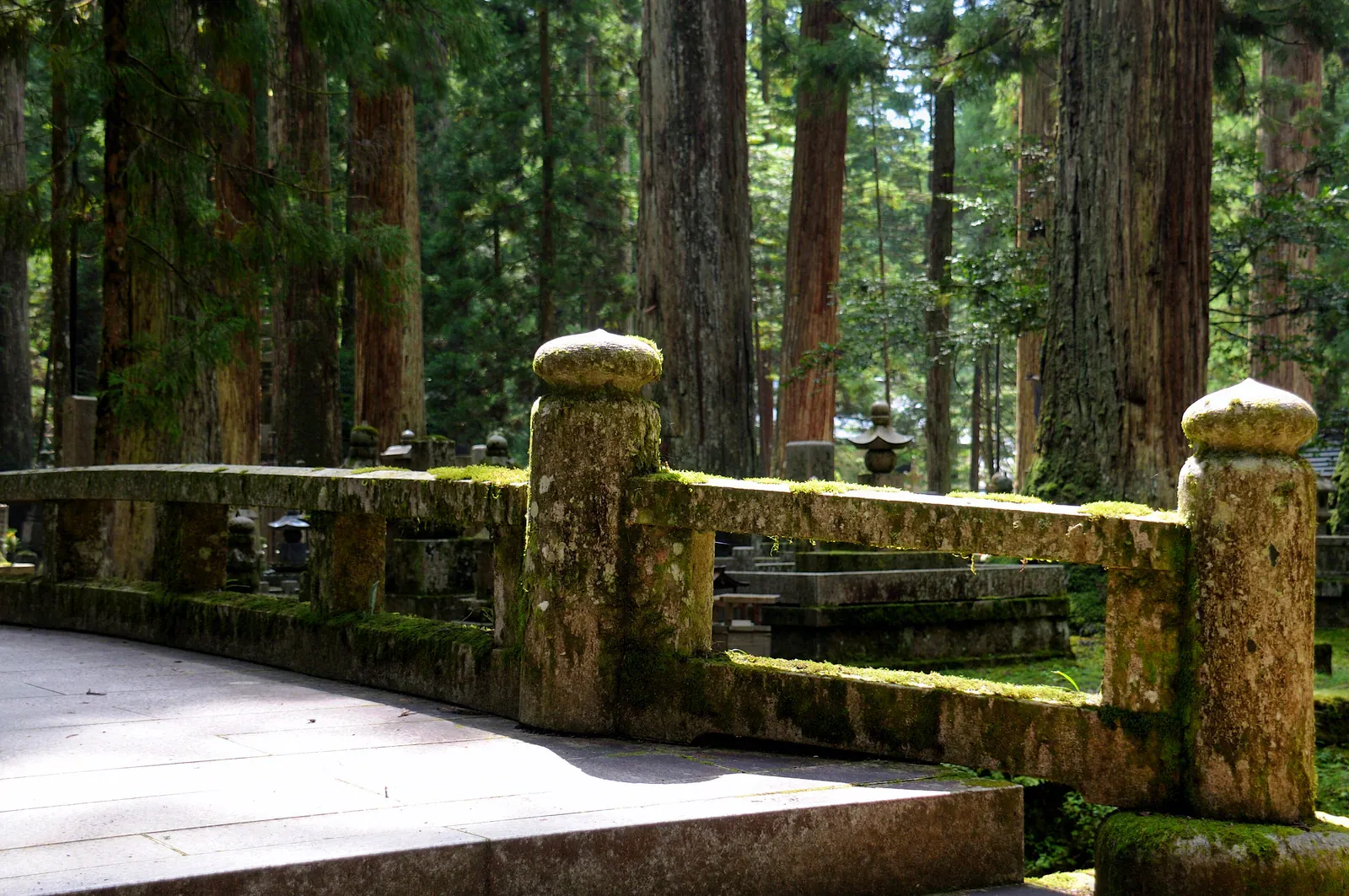
Founder of Shingon Buddhism and Koyasan, per Kongobuji, which says the mountain was founded by the monk Kobo Daishi. He received the posthumous title Kobo Daishi in 921 from Emperor Daigo, and Okunoin marks it with the Shigo Hosanke ceremony on 27 October, per the Koyasan site. Visit: Okunoin, Koyasan, Wakayama. Last known: Torodo Hall 6:00 to 16:45, no reservation for offerings, and sutra chanting happens at fixed times. Kongobuji, last known 8:30 to 17:00, last entry 16:30, adult ¥1,000 (about $6). See Koyasan temple stays.
Where next?
Read the culture hub for traditions and history, Famous people of Japan for anime, art and samurai history, and the tea ceremony guide with where to try tea ceremony. For temples, see Nara, Osaka, Koyasan and Ise temples and Kyoto temples and shrines.
Questions
- Every answer starts with
- Yes
- No
- Depends
- Not yet
- Fact
Where can I see the tea house built by Sen no Rikyu?
Taian, at Myokian temple in Oyamazaki, Kyoto, which the Kyoto City Tourism Association calls the only existing tea room said to be by him. Last known, per the Kyoto City Tourism Association page, it is open mornings only, for visitors of university age and up, at ¥1,000 (about $6), with booking required at least one month ahead. The temple's own page was not found.
Is the Haruki Murakami Library free?
Yes. The Waseda International House of Literature is free, last known open 10:00 to 17:00 and closed Wednesdays and other designated days. Groups of 21 or more need advance booking, and under 21 needs no reservation.
Which museum in Tokyo is about Matsuo Basho?
The Koto City Basho Memorial Museum in Koto-ku. Last known, adults pay ¥200 (about $1), and it is closed on the second and fourth Monday of the month. The roof garden on its annex is free.
Can I stay overnight at Eihei-ji in 2026?
Not as an international visitor in spring to autumn 2026. The temple's notice of 29 May 2026 says the overnight programme is not offered to international visitors and that an update will follow. Last known, day visits cost ¥700 (about $5), with no booking.
Last known, 10:00 to 18:00 with last entry 17:30, closed Mondays (the next day if a holiday) and 29 December to 3 January. Adults pay ¥300 (about $2), and special exhibitions are priced separately.
Related topics
- CultureJapan tea ceremony guide: styles, etiquette, prices and bookingWhat a tea ceremony is, the three styles, JNTO's etiquette steps, venue prices from ¥1,500 (about $10), and how to book and where you will sit.
- CultureWhere to try a tea ceremony: Kyoto, Uji, Tokyo and KanazawaVenues by city with the prices and booking steps their pages state: Camellia, Gion Corner, Taiho-an, Hamarikyu, Kenrokuen and Kanazawa Castle.
- CultureKoyasan temple stay (shukubo): booking, prices and rulesBook through the Koyasan Shukubo Association. One temple's two-meal plan costs ¥14,000 to ¥22,000 (about $90 to $140) per adult; each temple sets its own terms.