Guide · Wild and Trek
Sea life of Japan: whales, turtles, reefs and what to avoid
Whales, dolphins, turtles and reefs by place and season, the approach rules and the animals to avoid, with Okinawa's jellyfish advisory dates.
Japan’s sea life is easiest to plan by place: humpback whales at the Kerama Islands and Ogasawara in late winter, orcas at Rausu in spring and summer, loggerhead turtles at Yakushima from May. Stinging jellyfish are the best documented hazard: Okinawa recorded 81 box jellyfish stings in 2025, and its 2026 advisory runs from 1 June to 30 September. Approach rules are mostly voluntary at sea and firm on turtle beaches.
Dollar amounts are approximate, converted at about ¥155 to US$1. You pay in yen, so check the rate.
Which sea animals can you see, and where?
| Animal | Where | When | Note |
|---|---|---|---|
| Humpback whales | Kerama Islands, Okinawa | Late Dec to Apr | Visit Okinawa gives Jan to Mar |
| Humpback whales | Ogasawara | Feb to Apr | 12 to 30 people per boat |
| Sperm whales | Ogasawara | Mainly summer and autumn | Peak late Aug to Oct |
| Dolphins | Ogasawara | All year | Spinner and bottlenose; swim usually Jun to Oct |
| Dolphins | Mikurajima, Tokyo | Spring to autumn | Tokyo pages give Apr to Oct and Mar to Nov |
| Orcas | Rausu, Hokkaido | Apr to Jul | Tours run late Apr to Oct |
| Sperm whales | Rausu, Hokkaido | Jul to Sep | Cold at sea even in midsummer |
| Sea lions | Shiretoko, Hokkaido | Winter | Steller sea lions arrive from Russian breeding sites |
| Whales | Tosa Bay, Kochi | Early May to Oct | Peak Aug to Sep; no guarantee |
| Dolphins | Amakusa, Kumamoto | Year-round | Spring to summer; archive page |
| Loggerhead turtles | Yakushima | Eggs from late Apr | Hatching from early Jul |
A sighting is never guaranteed. Kochi’s page says “no guarantee” and refuses refunds when no whale appears. Amakusa’s archive page says the same.
Whales and dolphins: what do the rules say?
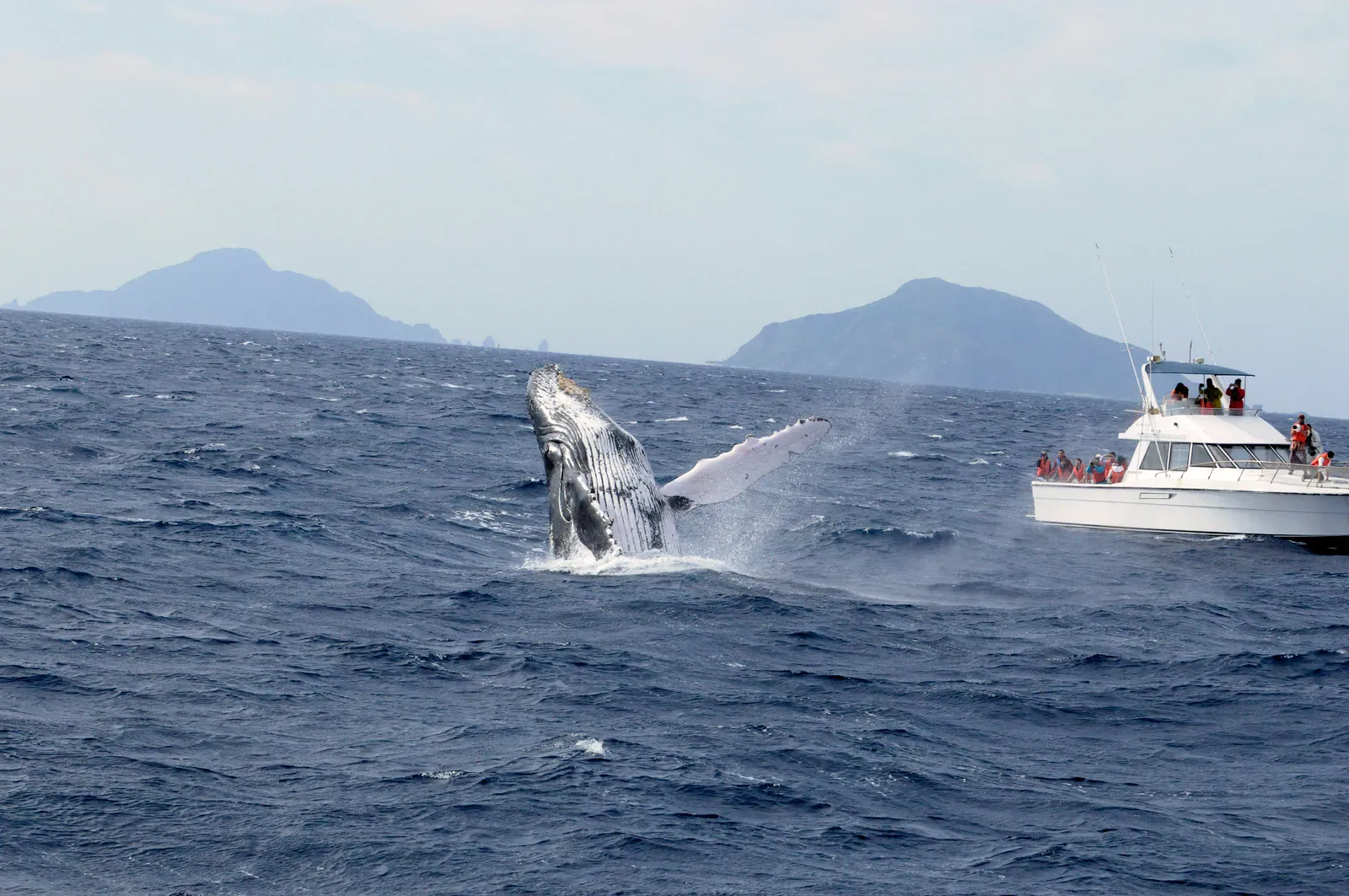
At the Kerama Islands, boats slow within 300 m of a humpback and keep no closer than 100 m, per JNTO and the MLIT database. Adults reach 13 to 15 m and 25 to 30 t, and calves are 5 to 6 m. The Zamami Whale Watching Association runs tours of 1 to 2 hours and listed ¥7,700 (about $50) for adults and ¥3,850 (about $25) for children aged 6 to 12, a last known price with no date. Humpbacks can also be seen from land: Inazaki and Takatsukiyama on Zamami, and Teruyama and the Mihanabaru trail on Tokashiki. Bring binoculars. The month-by-month detail is in Whale watching in Japan, month by month.
Ogasawara follows voluntary rules for boats under 20 gross tonnes within 20 miles of the islands, set out by the Ogasawara Whale Watching Association: slow within 300 m, at least 100 m from humpbacks, at least 50 m from sperm whales, and aircraft at least 300 m up. Larger boats face stricter rules. Around the dolphin groups at Mukojima, Chichijima and Hahajima, rules limit how many boats and how many approaches per boat, and a swim is not guaranteed.
Mikurajima has dolphin swims, but the official pages list no rules. Rausu’s page lists none either and says to check the company’s materials. In Hokkaido, the Ministry of the Environment’s Rausu centre notes that it does not arrange tours.
Kochi’s whale cruises last 5 hours, leave at 08:00 from May to September and are listed at about ¥8,000 (about $52) for ages 13 and over and ¥4,000 (about $26) for ages 3 to 12, last known prices with no date. Children under 3 and pregnant women are not allowed, and a minimum of 6 people applies. Book at least 3 days ahead from 1 March.
More to read
- Wild and trek Japan by season: volcanoes, whales, trails, FujiWhat to do outdoors in Japan each season, with the rules that decide it: volcano checks, whale boats, beaches, trail bookings, Fuji, Alps huts and bears.
- Visiting active volcanoes in Japan: what you can reachSakurajima, Aso, Hakone and Fuji are reachable, each with hard limits. Levels change without notice, so check the Japan Meteorological Agency the day you go.
- Volcano alert levels in Japan, and where to check themLevel 2 keeps you out of the crater area, Level 3 closes the mountain. Levels change without notice: read the JMA the day you go. Sakurajima and Hakone rules.
- Bears in Japan: where the risk is, and what to carryBears live on Honshu and Hokkaido. The ministry says make noise, hike in groups, check sightings and carry spray. FY2025 set a record: 238 people hurt.
- Climbing Fuji: reservation, fee and season rulesYoshida ran 1 July to 10 September in 2026. The fee was ¥4,000 (about $26) on every trail. Yoshida capped entry at 4,000 a day and shut its gate from 14:00 to 03:00.
Turtles: where do they nest?
Japan is the only North Pacific nesting ground for loggerhead turtles, and three turtle species nest in the country, per the Ministry of the Environment. At Yakushima, loggerheads and green turtles come ashore, and 30 to 40 percent of Japan’s loggerheads use Nagata Beach.
Egg-laying starts in late April and hatching from early July. Follow the ministry’s firm rules:
- From 1 May to 20 July, join an observation tour.
- From 21 July to 30 September, the hatching period applies.
- No entry at night, from 20:00 to 05:00, from 1 May to 30 September.
- Lights off, no touching, no recording, no camping, no campfires, no taking sand.
The Nagata tour takes up to 50 people, with reception at 20:00 and an end at 23:00. It costs ¥2,000 (about $13) for high school students and older and ¥500 (about $3) for junior high and younger, with a reservation through the Nagata Sea Turtle Liaison Council. Tours were cancelled in 2021, so check the current status. A Japan Tourism Agency page says Maehama tours cap at 50 a day and Kurio has no tours.
In Okinawa, collecting sea turtles or their eggs is banned under the prefecture’s fisheries pamphlet.
Reefs and marine parks: what is protected?
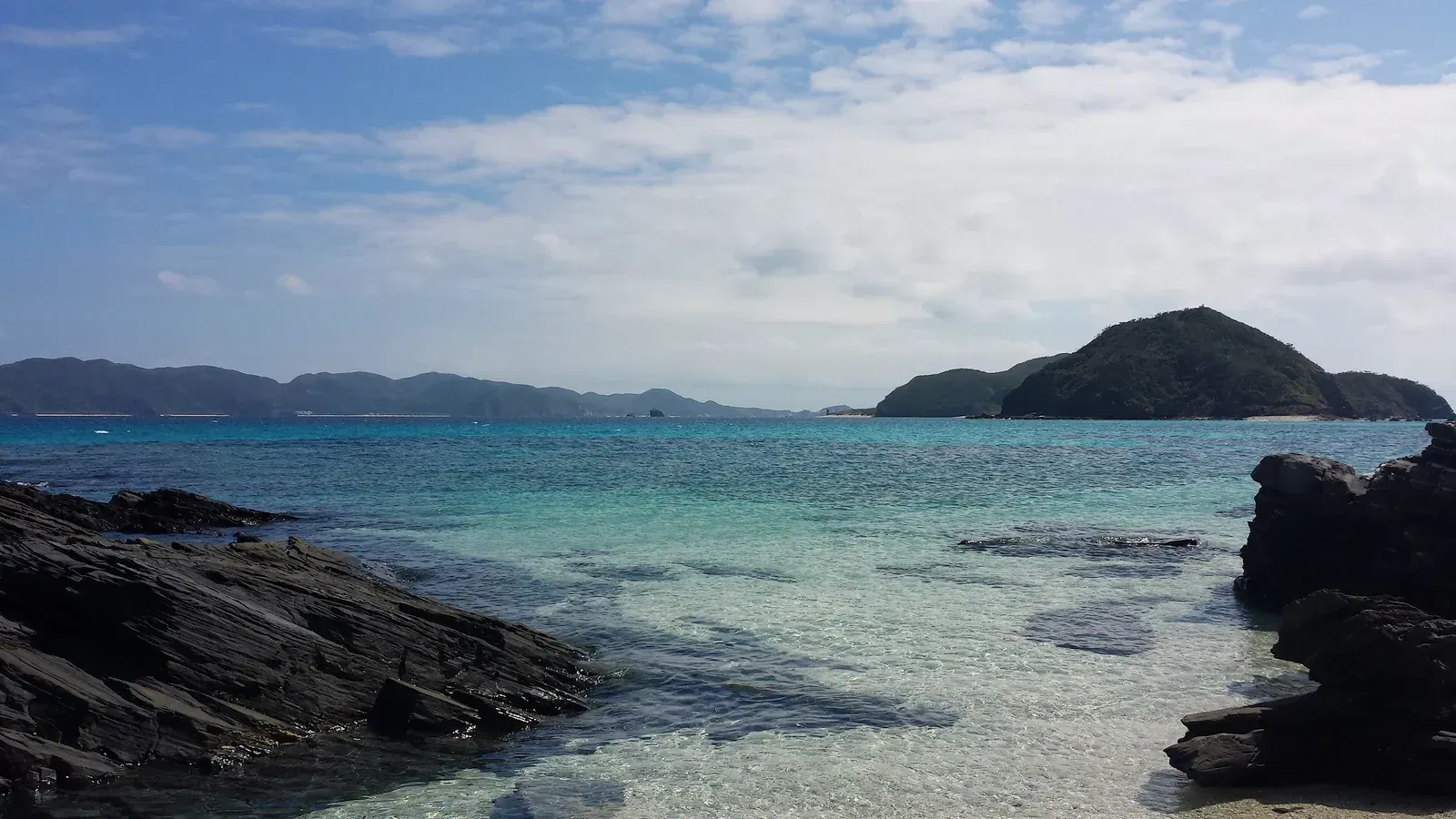
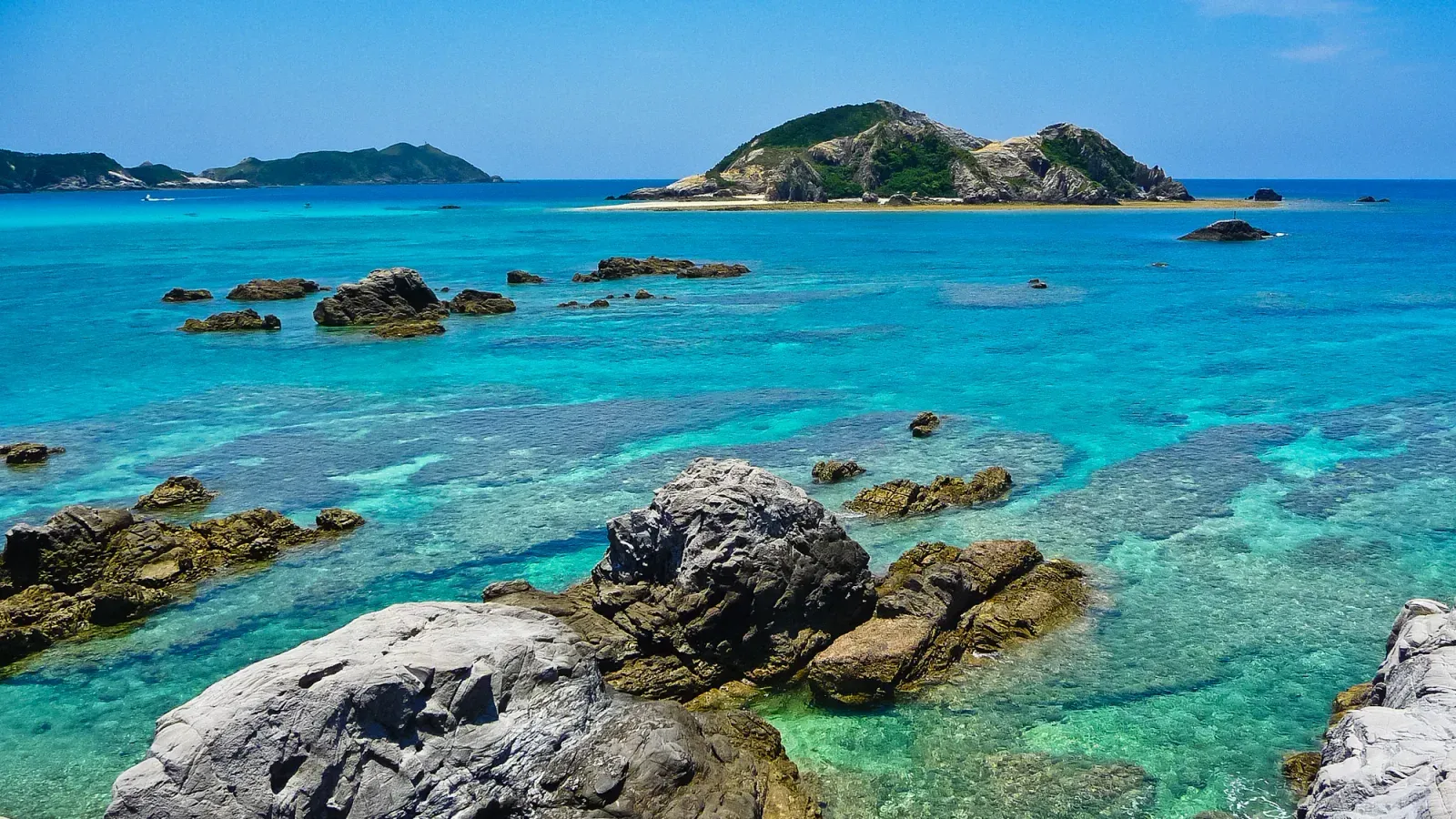
Kerama Islands National Park covers 3,520 ha and was established on 5 March 2014. JNTO says it holds more than 60 percent of Japan’s reef-building coral, nearly 250 coral varieties and about 100 dive spots. Iriomote-Ishigaki National Park covers 122,150 ha and dates to 15 May 1972, when it was Iriomote National Park. A Ministry of the Environment document describes Sekisei Lagoon as Japan’s largest coral reef, with about 360 reef-building coral species, though this figure is not confirmed.
Elsewhere: Ogasawara became a World Natural Heritage site in 2011, and Kushimoto’s coral communities in Wakayama are a Ramsar site from November 2005, about 574 ha. At Yonaguni, the Okinawa Convention and Visitors Bureau says hammerhead sharks gather at Hammerhead Rock on drift dives from about November to early May. Other pages give different windows, and the bureau rates the dive Advanced. Dive prices and regions are in Where to dive in Japan, and certification in Can I dive in Japan without certification?.
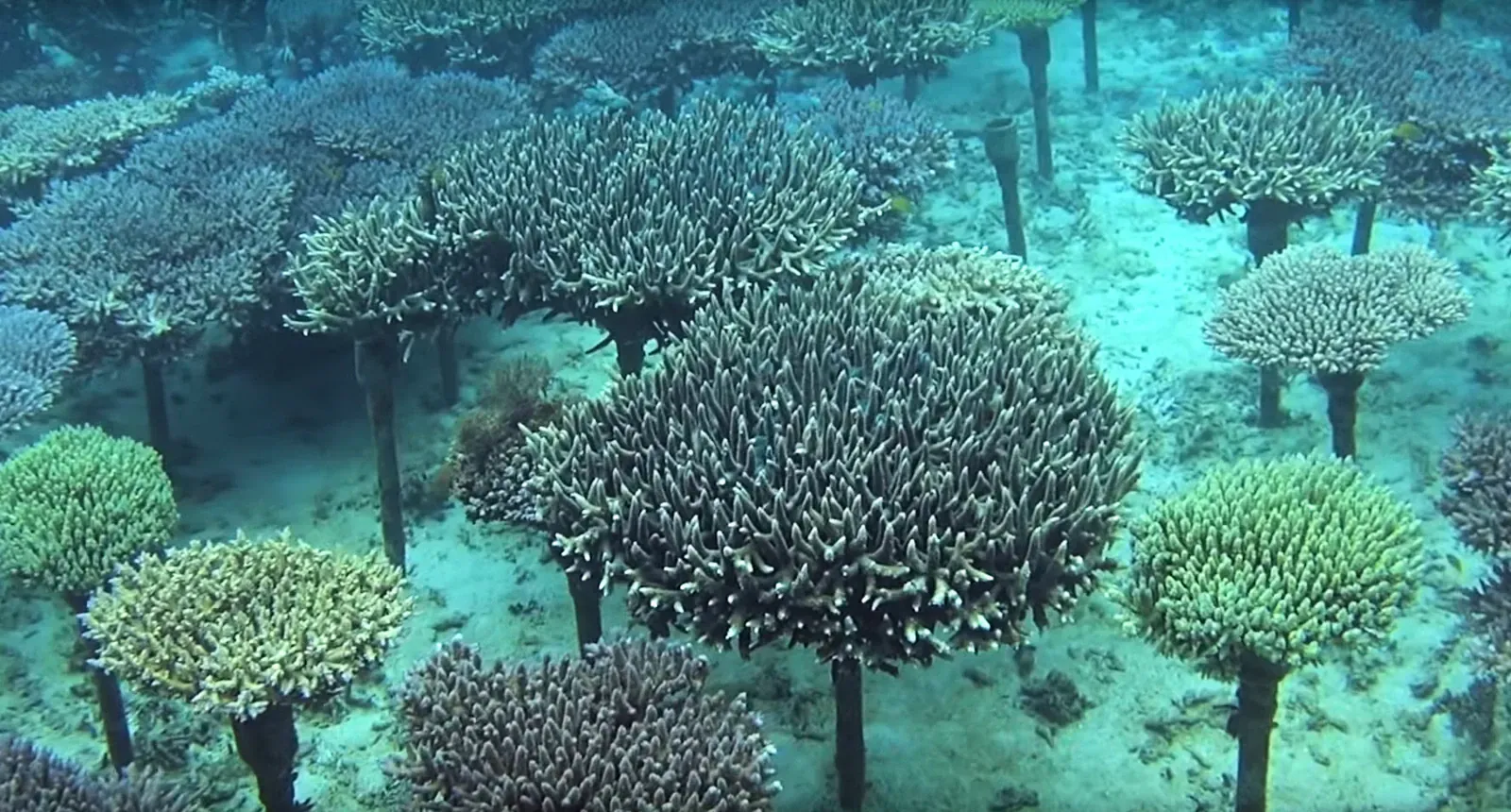
The rules for reefs are short. JNTO’s park rules say coral is fragile, do not touch it and avoid hitting it with fins. The Okinawa bureau suggests reef-safe sunscreen, no stepping on coral when entering from shore and fins off the reef. That is guidance, not law.
Collecting is a legal matter. Okinawa Prefecture’s pamphlet bans collecting reef-building corals, with up to 6 months in prison or up to ¥100,000 (about $645), plus sea turtles and their eggs and sea cucumbers. Urchins, octopus and lobsters fall under common fishing rights held by local cooperatives. For fishing in general, see Do tourists need a fishing licence in Japan?
Which aquariums publish fees and hours?
Okinawa Churaumi Aquarium is the one aquarium with fees and hours read from its own page. Adults pay ¥2,180 (about $14), high school students ¥1,440 (about $9) and ages 6 to 15 ¥710 (about $5), and children under 6 enter free. The annual pass is ¥4,360 (about $28).
Off-season hours are 8:30 to 18:30 with last entry at 17:30. Peak periods run to 20:00, and August 2026 ran to 21:00. The official page lists no closing days until 31 March 2027, apart from typhoons, and dolphin shows are suspended from 4 to 9 January 2027. Fees and hours for the aquariums in Chiba, Ikebukuro and Osaka were not confirmed.
Which sea animals are dangerous?
Most reported marine injuries in Okinawa are mild, and the largest group is the box jellyfish. Okinawa Prefecture recorded 199 marine sting and bite reports in 2025, of which 81 (about 41 percent) were box jellyfish (habu-kurage). Of those 81, 67 were mild, 7 moderate and none severe. July and August had 70 of the 81. Of all 199 reports, 92 involved people from outside Okinawa. The one severe case was a sea snake.
The 2026 box jellyfish advisory ran from 1 June to 30 September, issued by the prefecture on 1 June 2026. Its prevention advice: cover your skin, swim inside the jellyfish nets and bring vinegar. Beach custodians place and check the nets, and not every beach has them.
Okinawa Prefecture’s first aid for a box jellyfish sting is to leave the water at once, not scratch or rub, pour household vinegar (4 to 6 percent acetic acid) over the skin liberally, remove tentacles that are no longer active, cool the area with ice or cold water, and go to hospital.
The prefecture’s 2025 count for the man-o’-war was 15 reports. It is an open-ocean animal that wind pushes ashore, with tentacles that can reach tens of metres, and repeated stings can cause anaphylaxis. A milder look-alike, the katsuo-no-kanmuri, washed up in Higashi in April 2025. Kamakura City says man-o’-war strand in strong south wind from May to August.
Hayama Town in Kanagawa publishes a guide to dangerous sea life. For two jellyfish, the andon-kurage and aka-kurage, it says remove tentacles with tweezers, wash with seawater and avoid fresh water, which may fire the stinging cells. The guide names other animals:
- Long-spined urchin: remove all spines and wash with water.
- Red stingray: spines; it advises a hot water soak for pain and a clinic if pain continues.
- Moray eel: no venom, but it bites if a hand goes into a crevice.
- Blue-ringed octopus: 5 to 10 cm, with venom that has no antidote. Do not touch it.
Okinawa’s leaflet adds one rule for venomous creatures: do not try to suck venom out, because it is poisonous if swallowed. For sea snakes and the blue-ringed octopus, the prefecture says get to hospital fast. The JNTO Japan Visitor Hotline, 050-3816-2787, is open 24 hours in several languages.
What do the currents and water do?
Two warm currents and one cold current shape the coast. The Kuroshio, the Pacific’s largest current, starts in the East China Sea and runs along the Pacific coast, about 200 km wide. The Tsushima Current splits off near Kyushu into the Sea of Japan, and the cold Oyashio flows south from off Hokkaido, at about 20 cm/s. The Japan Coast Guard’s navigation guide says the Kuroshio usually averages about 2 to 3 knots and is stronger in winter and spring.
Yonaguni’s current is swift, and its drift dives are rated Advanced. One 2010 study led by JAMSTEC counted 33,629 marine species in Japanese waters, and said over 70 percent of the marine life remained undescribed.
What is not published?
Several answers are not on official pages. No Okinawa rule for touching or approaching turtles was found, and no Ogasawara green turtle nesting dates. Manta ray season at Ishigaki is listed differently by different sources, with no official page, and JNTO says only that summer from July to mid-October has a high chance. The Zamami association’s own rule text was not read. Dugongs are listed as a natural monument, and surveys have found very few, if any, remaining, so they are not reliably seen. No official shark guidance or general shell-collecting rule for visitors was found.
Where next?
The Wild and Trek hub lists every outdoors page. Japan outdoors by season puts whales next to volcanoes and trails. For Okinawa planning, see the Okinawa travel guide and Okinawa beach season. For beach dates, see Beaches by region; for the Hokkaido winter sea, Shiretoko drift ice.
Questions
- Every answer starts with
- Yes
- No
- Depends
- Not yet
- Fact
When can you see whales in Japan?
It depends on the place. Humpbacks reach the Kerama Islands in Okinawa from late December to April and Ogasawara from February to April. Rausu in Hokkaido has orcas from April to July and sperm whales from July to September.
When is box jellyfish season in Okinawa?
Okinawa Prefecture's 2026 advisory ran from 1 June to 30 September. Swim inside the jellyfish nets, cover your skin and carry vinegar. Okinawa Prefecture's advice is vinegar for its box jellyfish (habu-kurage); for the Portuguese man-o'-war the guidance says do not use vinegar.
Can I touch sea turtles in Japan?
No official touching rule was found for Okinawa. At Yakushima, the Ministry of the Environment says do not touch, keep lights off and stay off the beach from 20:00 to 05:00 from 1 May to 30 September.
Is vinegar the right first aid for every jellyfish sting?
No. Okinawa Prefecture's advice is vinegar for its box jellyfish (habu-kurage). For the Portuguese man-o'-war, the prefecture says do not use vinegar and rinse with seawater, and Kamakura City says fresh water or vinegar backfires.
No official shark guidance was found. News reports describe towns closing a beach for a few days after a sighting, which is rare.
Related topics
- Wild and TrekWhale watching in Japan, month by monthHumpbacks in Okinawa and Ogasawara from winter, orca and sperm whales off Rausu in summer. Month table, boat distance rules and the dates not yet published.
- Wild and TrekBeaches and swimming in Japan, by region: 2026 dates, fees and rulesOkinawa beaches open from March, most Shonan beaches in July and Shimoda on 18 July. Dates, fees and local rules by region; swim inside the nets in Okinawa.
- Wild and TrekWhere to dive in Japan: Okinawa, Kerama, Yonaguni and OgasawaraOgasawara fun dives run ¥13,500 to ¥20,000 (about $87 to $130). Card levels, Ishigaki prices and Yonaguni, Kerama and Rausu notes, region by region.